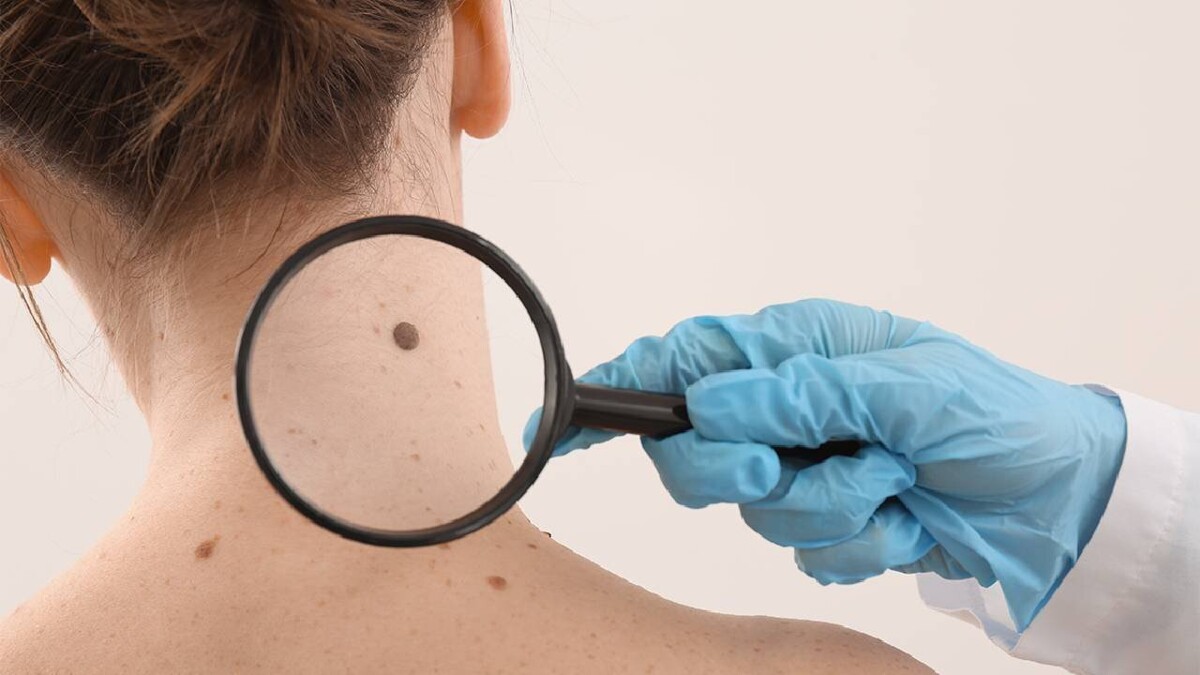
Skin cancer begins as a proliferation of cells in the skin, which can invade and destroy healthy body tissues, while sometimes these cells can detach and spread to other parts of the body. This type of cancer can be caused by exposure to ultraviolet (UV) radiation from the sun or tanning beds, and it manifests as new or changing moles, sores that do not heal, or growths with unusual color, size, shape, or texture. Within the framework of the National Skin Cancer Prevention Campaign, and based on a report accessed by the Argentine News Agency, the British Hospital warns about the incidence of this disease in our country, the importance of measures to prevent sun damage, as well as the need for mole checks. "Skin cancer has an incidence rate of 212 cases per 100,000 inhabitants (considering both sexes and all tumors except non-melanoma skin cancer), a figure that places it among the countries in the world with a medium-high cancer incidence, ranking it seventh in Latin America," warns Gabriel Noriega (M.N. 103.548), head of the Dermatology Service of the aforementioned health center. In this regard, the specialist points out: "The two main causes of skin cancer, the most common in humans, are ultraviolet (UV) rays from the sun and the use of tanning beds. Since sun damage is cumulative, repeated and indiscriminate exposures lead in the long term to premature aging, precancerous lesions, and this disease." In Argentina, around 130,000 new cases are detected annually, and about 600 people die from melanoma (one of the most aggressive types). According to the latest statistical data from the International Agency for Research on Cancer (IARC), Argentina has an incidence rate of 212 cases per 100,000 inhabitants (considering both sexes and all tumors except non-melanoma skin cancer), a figure that places it among the countries in the world with a medium-high cancer incidence, ranking it seventh in Latin America. "If skin cancer is detected in time, it can be treated with high probabilities of a cure, even in early stages when the tumor has not yet developed," emphasizes Dr. Noriega. The 5 main preventive measures are: Avoid direct sun from 10 am to 4 pm. Use clothing that covers the body, UV-protective lenses, and hats. Use sunscreen with an SPF of 30 or higher. Check your moles monthly. "Moles or melanocytic nevi are common in all people. They are often brown in color, have regular borders, and are smaller than 5-6 mm. They can appear anywhere on the body and at any age, being more frequent in the first 20 years of life. They can start as a spot and over the years become raised, lose their color, and sometimes have hairs," specifies the professional. Atypical or dysplastic nevi are usually larger than 6 mm, slightly asymmetrical, have several shades of brown or pink, and show a strange appearance. When should you see a doctor for moles? If it has recently appeared and is noticeable. If it grows continuously or abruptly. If it changes color. In case of erosion, itching, bleeding, or a scab on the mole. Tanning is a defense mechanism of the skin. Sunscreen with SPF 50 is very useful for people with a history of skin cancer. If the skin turns red, it is due to the effect of the sun's rays. You need to reapply sunscreen every 2 hours if you sweat or get wet. If a mole changes in color, shape, size, or texture, or if it itches, bleeds, or does not heal, you should see a doctor. "Skin cancer is preventable. Protect your skin."